Different triangles....

Image: Fer Troulik (via Unsplash)
My pal Jon told me the other day that he had a problem with the term ‘holistic’. ‘How can we be holistic if we are not trained in everything? We are chiropractors’.
I
can understand what he is saying. After all, we are trained mainly in
biomechanics. I would however argue that we need to be aware that not
every pain is a biomechanical problem, and that there are multiple
ways to look at patients.
If
we over-simplify things massively (always the best way to present a
point of view), we can say that health/illness is made up of three
possible issues:
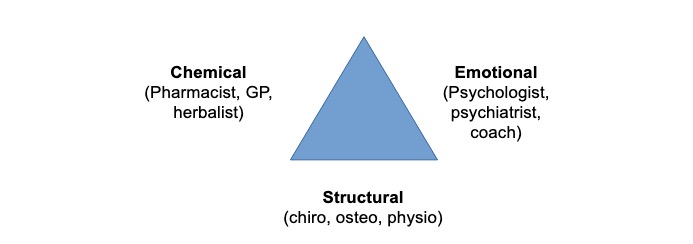
As practitioners are default setting will be to look at our patients through our own specialist lenses. This should not make us blind to other points of view, however. We should always consider that something other than a ‘structural’ (aka biomechanical) issue may be causing a patients problem. I inadvertently did this during a consultation with a patient who had undergone a termination. I did a blogpost about it here. That patients back pain may have looked more like this:

I am not a psychologist, but just
acknowledging the emotional aspects of this patients situation seemed
to be key to being helpful.
A patient with mid-thoracic pain might simply have a mechanical issue in that part of the spine, but it’s also possible that they have referred pain from inflammatory changes due to overproduction of acid in the stomach. Their back pain might be more like this:

We might counsel them about things that might affect the chemistry of the stomach: avoiding coffee, alcohol and smoking, NSAIDs.
We don’t have to be experts in everything. No-one can be, of course. We just have to think that there are a variety of possible causes of the patients symptoms. If they need specialist medical advice then, of course they should be referred.
I like to think of us as detectives, particularly Columbo, who would always ask: ‘Just one more thing….’ He was a truly holistic detective! My hero.